
Pista House bakery legacy shaped Hyderabad’s tea culture
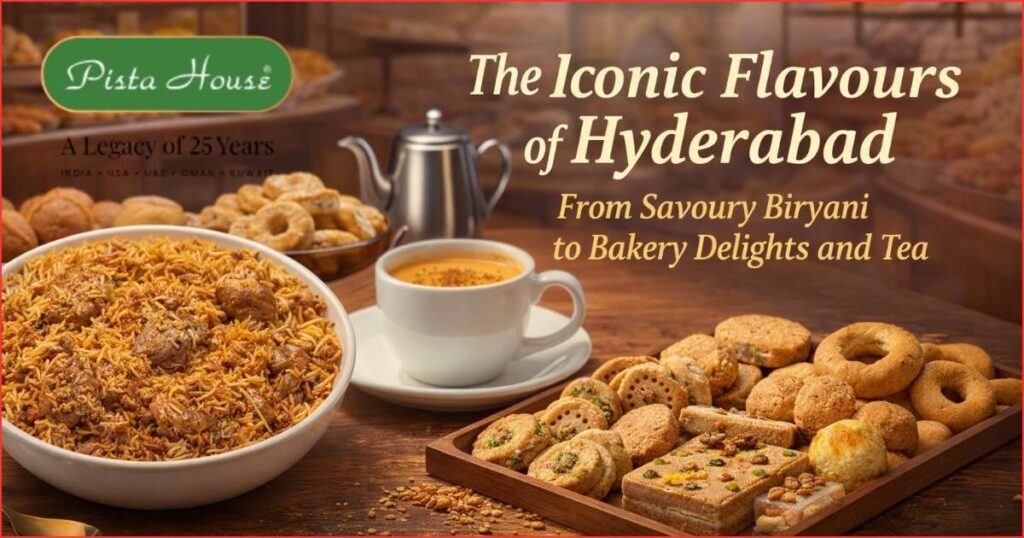
Hyderabad: The Pista House bakery legacy remained a defining part of the brand’s identity alongside its better-known savoury dishes. Before it became strongly associated with celebratory meals, the brand built its reputation through bakery products and tea that fitted into Hyderabad’s everyday routine.
Its early bakery presence near Charminar was marked by simple offerings. Biscuits, cakes and sweets were prepared for families who sought familiar tastes instead of novelty. These products were bought for home consumption, festive gifting and casual gatherings. As a result, the brand became part of ordinary social and family moments across the city.
That early bakery focus created trust. It also gave the brand a stable base from which it later diversified. Because customers already associated the outlet with consistency and familiarity, the expansion into wider food categories took place on an established foundation.
The Pista House bakery identity did not recede as savoury dishes gained prominence. Instead, bakery items continued to hold their place on the menu. For many customers, a visit to the brand remained linked not only to dining but also to picking up biscuits, sweets or other baked products. This dual role, as both restaurant and bakery, reflected Hyderabad’s broader culinary culture, where substantial meals and tea-time snacks existed side by side.
Pista House bakery and Hyderabad’s daily habits
Tea formed an important part of that continuing identity. Hyderabad’s relationship with chai has long been social, with conversations shaped in cafés and at roadside stalls. Within that setting, the brand offered beverages such as Zafrani Chai and Irani-style tea. These drinks were presented not as minor additions, but as part of the larger customer experience.
That positioning mattered because tea extended the visit. It complemented the food and encouraged people to stay longer together. In that sense, the tea offering supported a culture of shared time rather than quick consumption alone.
The bakery segment also widened the brand’s reach. Full meals were often tied to particular occasions. However, baked goods and tea appealed across age groups and settings. This made the brand present in daily life, not only during celebrations. The accessibility of bakery products helped keep the outlet relevant to customers whose engagement with food was routine rather than event-based.
Another part of this legacy lay in craftsmanship. Baking demanded precision and consistency. Those qualities helped shape the brand’s broader food preparation standards. Techniques refined in the bakery influenced other kitchen operations as well. Consequently, the values of process and attention to detail moved beyond one segment and informed the larger business approach.
As dining preferences changed, many brands moved away from traditional bakery lines and turned to more specialised menus. Pista House followed a different course. It retained this segment and continued refining it. That decision produced a layered identity which drew on nostalgia while staying connected to contemporary tastes.
Pista House bakery memories and continuity
For long-time patrons, the Pista House bakery carried personal associations as well as commercial value. A biscuit linked to childhood, a cake shared at a family milestone, or a cup of tea taken during a brief pause in the day all contributed to that connection. These memories strengthened emotional attachment to the brand and placed it within shared personal histories.
Such associations also showed that the brand’s legacy was not built only through its headline dishes. Its quieter offerings sustained a different, but equally durable, relationship with customers. Bakery products and tea entered homes, small gatherings and everyday routines in ways that large celebratory meals did not always do.
The continuity of that segment therefore became central to the brand’s long-term identity. Even as the public image of Pista House grew around savoury food, the bakery and tea heritage remained active within the customer experience. The coexistence of these elements reflected the city’s own food culture, where formal dining, casual snacking and tea-drinking often overlapped.
By preserving this dimension, the brand continued to honour its origins. At the same time, it contributed to Hyderabad’s wider culinary culture through products tied to familiarity, repetition and memory. In that account, the Pista House bakery legacy stood not apart from the brand’s growth, but at the centre of how it stayed woven into daily urban life.
About The Author