
How Bollywood chai branding shaped BHAI ki CHAI’s identity
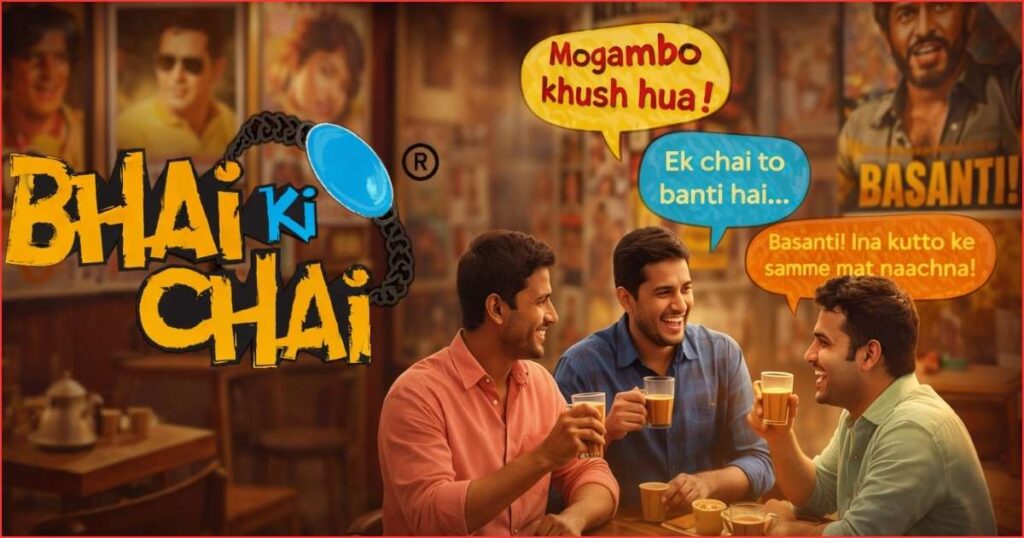
Hyderabad: Bollywood chai branding helped BHAI ki CHAI build a café identity around familiarity rather than spectacle. The brand used film references, dialogues and visual cues as a cultural language that customers already understood. As a result, the space felt instantly recognisable, much like chai itself in daily Indian life.
The brand did not treat Bollywood as a decorative theme. Instead, it used cinema as a shared social vocabulary. That choice reflected how film dialogues had long shaped everyday conversation across India. In homes, offices and public places, people had quoted lines from films with ease. BHAI ki CHAI drew on that habit and linked it to the comfort of tea.
The concept rested on familiarity, not nostalgia alone. Customers did not need to decode the setting. They already recognised the language, mood and references. Therefore, the brand created an atmosphere that felt accessible from the first visit. The experience stayed rooted in ordinary social behaviour rather than curated display.
Its interiors and visual identity also followed restraint. Film posters, lines and expressions appeared as subtle cues. However, they did not overwhelm the space. They worked as conversation starters instead of central attractions. Customers often responded instinctively, using those cues to open discussions or continue existing ones.
In that setting, Bollywood functioned as a background language. It supported interaction without demanding attention. That balance gave the café a lived-in feel. Consequently, the branding complemented tea and conversation instead of competing with them.
Bollywood chai branding linked cinema and chai culture
The approach worked because chai and cinema performed similar social roles. Both had been experienced collectively and usually with discussion. People rarely watched a film reference in isolation when recalling it later. In the same way, chai had often been part of a shared pause, debate or meeting. BHAI ki CHAI positioned itself where those two habits overlapped.
That overlap gave the brand a practical advantage. Customers did not encounter an abstract concept. They stepped into a space built around familiar behaviour. Cinema references helped break the ice. Tea sustained the conversation. Together, they turned the café into an extension of everyday social life.
The brand also avoided tying itself to one era of Hindi cinema. Its references remained broad and inclusive. Because of that, different age groups could relate to the setting. Older customers identified familiar expressions from earlier films. Younger visitors connected with contemporary cues and recognisable pop-cultural language. The mix prevented the café from looking dated. It also kept the space from appearing overly trend-driven.
Bollywood offered emotional accessibility as well. Its language had long been informal, expressive and widely understood. That tone closely matched the atmosphere of chai stalls and neighbourhood cafés. By adopting that language, BHAI ki CHAI reinforced its image as approachable, not aspirational. The café did not present itself as distant or highly stylised. Instead, it stayed close to the texture of everyday interaction.
That choice mattered in branding terms. Many themed cafés relied on novelty to attract attention. BHAI ki CHAI used a different method. It chose recognition over surprise. As a result, the environment felt familiar before it felt designed. The customer experience depended less on visual performance and more on social ease.
Bollywood chai branding stayed relevant through restraint
Another strength of Bollywood chai branding lay in its adaptability. Cinema kept changing, and the brand’s reference system could change with it. Yet the core identity did not need replacement. The foundation remained chai, conversation and shared cultural cues. New references could enter the space without disrupting that base.
This made the branding flexible without making it unstable. The language could refresh itself over time. Meanwhile, the central promise stayed intact. Customers continued to encounter a place built on recognisable social behaviour. That continuity helped the brand remain culturally relevant without chasing every passing trend.
Many customer responses also operated at a subconscious level. Visitors might not have analysed the design in formal terms. Even so, they recognised the comfort it offered. The environment felt natural rather than staged. Therefore, the branding achieved its effect quietly. It did not announce itself loudly, yet it shaped how people settled into the café.
That subtlety set the brand apart in a crowded café market. Themes were often used for novelty, display or short-term recall. BHAI ki CHAI applied cinema with more restraint. Bollywood became a shared reference point, not a spectacle. This approach aligned with the brand’s larger emphasis on simplicity and repetition. The space encouraged people to stay, talk and return.
Ultimately, Bollywood chai branding worked because it mirrored how people already communicated. It supported the café experience without distracting from it. Like chai itself, the language felt familiar, widely understood and woven into daily life. By bringing those two elements together, BHAI ki CHAI created a setting shaped by recognition, ease and shared conversation.
About The Author