
BHAI ki CHAI: organising India’s most familiar ritual within a contemporary café ecosystem
When BHAI ki CHAI was founded in Hyderabad in 2017, it was not conceived as a disruptive food and beverage startup. It emerged from cultural observation rather than market experimentation. In India, chai is not positioned as a product category — it is embedded in lived experience. It accompanies mornings, punctuates work schedules, anchors roadside conversations and sustains domestic routines. It is consumed across economic divisions, across professions and across generations. Tea in India functions simultaneously as refreshment, habit and social bridge.
The founders recognised that while chai was omnipresent, its consumption within organised urban settings remained fragmented. Rather than repositioning chai as a premium, niche or aspirational beverage, BHAI ki CHAI chose a different path: preserve its everyday familiarity and structure its delivery through a contemporary café format. The brand’s intent was not to modernise chai culture but to organise it — to introduce reliability, standardisation and comfort without separating it from its cultural roots.
The journey began with a single outlet in Banjara Hills. Instead of expanding aggressively, growth followed organic customer behaviour. Regular tea drinkers returned consistently, building habits around the outlet. Word-of-mouth and repetition — rather than trend-driven spikes — shaped expansion. Over time, BHAI ki CHAI became embedded in Hyderabad’s daily urban rhythm.
Vision anchored in simplicity
The core philosophy of BHAI ki CHAI rests on restraint. The founders believed chai does not require reinvention or dramatic innovation. Its strength lies in repetition and predictability. Millions of Indians consume tea daily with minimal variation. Respecting that repetition became foundational to the brand’s identity.
Every operational decision reflected this thinking. From naming to outlet layout to menu structure, simplicity guided execution. The cafés were conceptualised as informal spaces that encourage conversation and flexibility. Customers were not pressured to order multiple items or vacate quickly. The environment was intended to mirror neighbourhood tea culture while providing greater consistency and comfort.
Unlike global café chains that often curate highly stylised experiences, BHAI ki CHAI adopted a grounded approach. It prioritised relatability over exclusivity. This deliberate avoidance of over-engineering strengthened customer connection. By aligning with what people already value about chai — warmth, familiarity and routine — the brand enhanced loyalty.

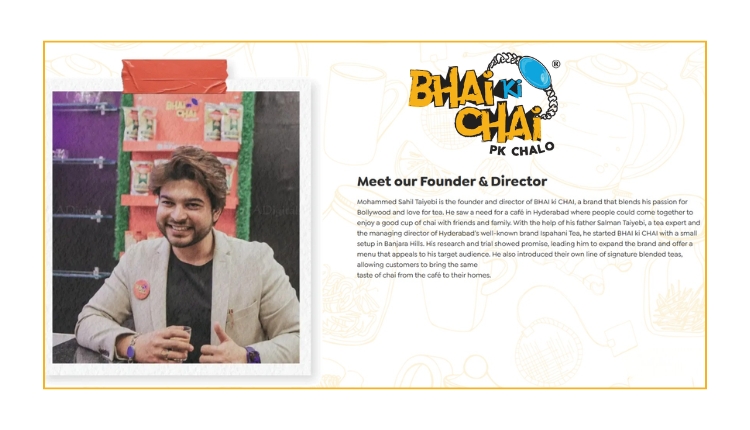
Mohammed Sahil Taiyebi
Founder & Director
Mohammed Sahil Taiyebi founded BHAI ki CHAI with a vision shaped by personal habit and cultural awareness. A regular tea drinker, he understood chai’s emotional significance. At the same time, his interest in Bollywood and popular cinema informed his understanding of shared language in Indian society.
Sahil recognised a parallel: cinema and chai both generate conversation. Film dialogues are quoted in everyday speech; tea accompanies discussions of those very films. He conceptualised BHAI ki CHAI as a café that reflects this shared cultural space.
From the first outlet in Banjara Hills, Sahil ensured the ambience felt lively yet rooted in familiarity. Cinematic references were incorporated subtly — through visual elements and expressions that resonated across generations. These were cultural signals, not decorative themes.
His management style emphasised observation. Rather than relying solely on theoretical assumptions, he closely monitored customer behaviour. How long did patrons stay? At what times did they visit? What prompted return visits? These behavioural insights informed gradual refinements in layout, service processes and menu stability.
Under his leadership, the brand expanded across Hyderabad while maintaining a consistent identity. The customer base remained diverse — students seeking informal gathering spots, young professionals taking mid-day breaks, families meeting casually and older patrons maintaining long-standing tea habits. Cultural relatability, rather than demographic targeting, became the brand’s anchor.
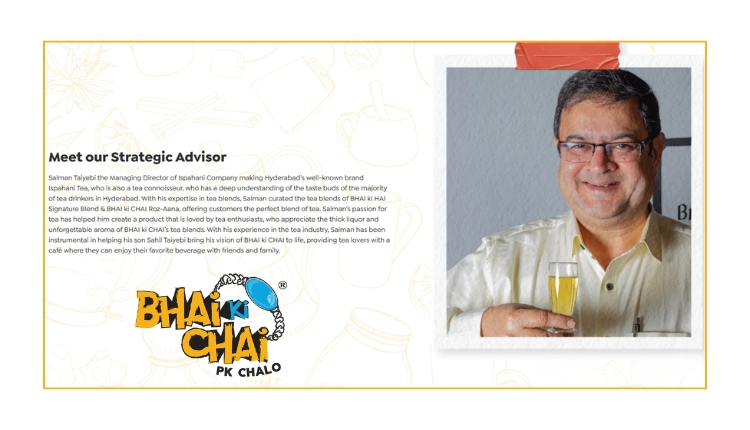
Salman Taiyebi
Strategic Advisor
Strategic depth came through Salman Taiyebi, who brought decades of expertise from the Indian tea industry. As Managing Director of the Ispahani Company, a long-established tea enterprise, he contributed extensive knowledge of sourcing, blending and flavour profiling.
His involvement ensured that BHAI ki CHAI’s product quality matched its cultural positioning. He curated the brand’s signature blends, carefully calibrating flavour to align with local expectations. The result was a cup characterised by strong aroma, balanced strength and a thick liquor — attributes that resonate deeply with everyday tea drinkers in Hyderabad.
Standardisation became critical. Preparation techniques, brewing duration and ingredient ratios were implemented uniformly across outlets. This technical discipline ensured that whether a customer visited a kiosk or a full café, the taste remained consistent.
The collaboration between father and son integrated intuition with industry precision. Cultural insight shaped ambience and branding, while technical expertise safeguarded product integrity. This balance allowed BHAI ki CHAI to scale sustainably without compromising its core offering.
The linguistic power of “BHAI ki CHAI”
The name BHAI ki CHAI carries cultural weight. The word “bhai” is widely used across India as a term of informal address. It conveys familiarity, equality and warmth. It dissolves hierarchy and creates immediate approachability.
By choosing conversational language, the brand positioned itself within everyday speech. Customers refer to it casually — “let’s meet at BHAI ki CHAI” — embedding the name into routine dialogue. This linguistic simplicity strengthened its urban integration.
The name also reflects the broader philosophy: chai that belongs to everyone, served in inclusive spaces rather than curated environments.
Taste as disciplined familiarity
While many beverage brands pursue novelty through flavour experimentation, BHAI ki CHAI deliberately avoided alienating regular tea drinkers. Its emphasis remained on balance and recognisability.
Consistency was treated as non-negotiable. Every outlet adhered to precise preparation standards to ensure identical taste profiles. Customers could visit any location with confidence.
Rather than introducing frequent menu refreshes, the brand protected its core product. Over time, this stability became central to customer loyalty.
Format flexibility without identity dilution
As the brand expanded geographically, it adopted multiple outlet formats. Compact kiosks catered to high-traffic zones where customers sought quick pauses. Larger cafés were established in neighbourhoods where patrons preferred extended conversations.
Despite differences in physical space, the brand identity remained unified. The same flavour, service tone and visual language carried across formats. Each outlet adapted to its surroundings without fragmenting the overall experience.
This flexibility allowed organic scaling while preserving recognisability.
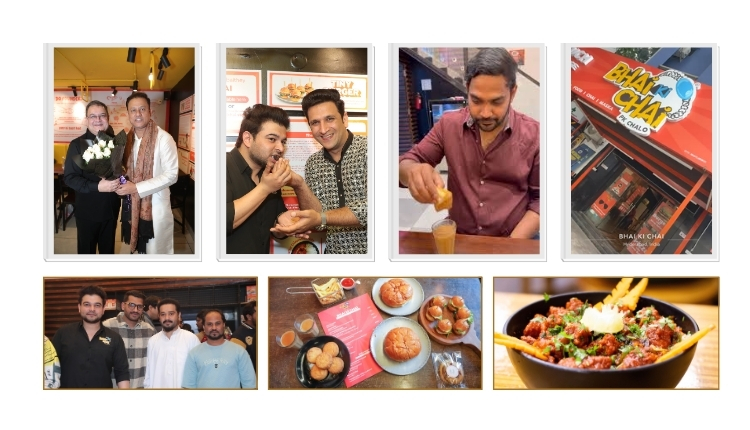
Bollywood as subtle connective tissue
Bollywood references serve as shared cultural cues within BHAI ki CHAI’s identity. Dialogues and visual elements function as familiar touchpoints across generations.
Cinema in India shapes everyday conversation much like chai shapes daily schedules. By incorporating film references in a restrained manner, the brand enhanced approachability without overshadowing its primary offering.
The café as urban pause
Hyderabad’s pace leaves limited room for unstructured breaks. BHAI ki CHAI functions as a pause point. Customers may stop briefly during commutes or stay longer in the evenings.
The space accommodates conversation, solitude or casual observation without pressure. This adaptability integrates seamlessly into diverse routines.

Chai as equaliser
Chai historically bridges social divisions. BHAI ki CHAI preserved this characteristic by maintaining accessible pricing and inclusive ambience.
Students, traders, professionals and families share the same space without segmentation. Differences recede naturally in a common setting.
Extending presence into homes
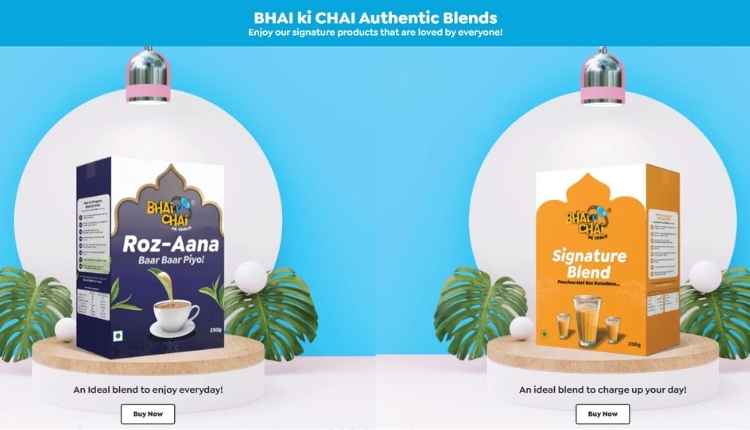
With the introduction of packaged chai blends, BHAI ki CHAI expanded beyond cafés. These blends replicate the flavour profile associated with its outlets, enabling customers to recreate familiar taste at home.
This extension complements café visits rather than replacing them, maintaining continuity between public and private consumption.
Growth defined by sustainability
BHAI ki CHAI consciously avoided rapid, trend-driven expansion. Growth decisions prioritised sustainability and habitual demand over scale alone.
Today, it stands as a Hyderabad-rooted brand built on repetition, cultural familiarity and consistent execution — offering a dependable cup woven into the city’s everyday life.
About The Author