
BHAI ki CHAI founding vision shaped steady growth

Hyderabad: BHAI ki CHAI founding vision took shape in 2017 when a father and son set out to position tea as a social connector rather than a counter service. They built the brand on daily observations of how chai linked people across age groups and professions.
Salman Taiyebi partnered with his father, Mohammed Sahil Taiyebi, to translate that belief into a business model. The father contributed experience and steadiness. Meanwhile, the son brought insight into urban youth behaviour and shifting consumption patterns. Together, they defined the direction of the venture.
Instead of launching a conventional café, the duo adopted a format rooted in familiarity. They chose not to reinvent tea. Rather, they focused on preserving routine and creating a space that encouraged repeat visits. Therefore, early menu choices and store layouts reflected everyday habits. This approach kept the concept accessible.
BHAI ki CHAI founding vision emphasised consistency
Consistency anchored the BHAI ki CHAI founding vision. The father set strict standards for taste and service. Each outlet followed uniform preparation methods. As a result, customers experienced the same flavour and service across locations.
Regular visitors began to treat the brand as part of their routine. The founders prioritised discipline over aggressive marketing. Consequently, trust grew steadily among patrons.
At the same time, the son shaped the brand’s cultural identity. He introduced cinema references and informal language into branding. The atmosphere remained relaxed and relatable. However, these elements never distracted from the simplicity of chai. They supported the core offering without altering its essence.
BHAI ki CHAI founding vision guided cautious expansion
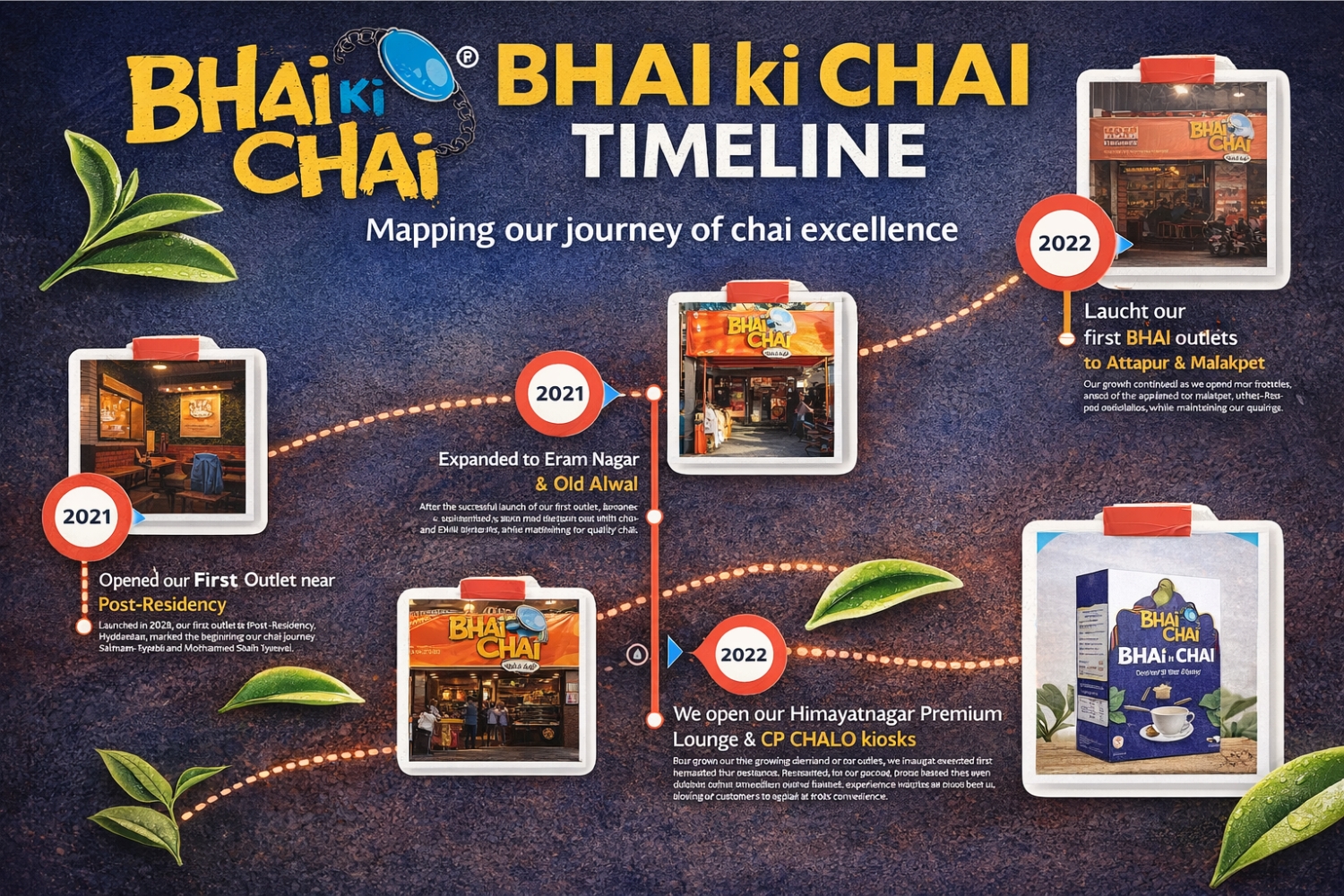
Strategic decisions followed joint discussions. The founders weighed sustainability and relatability before approving any move. Thus, the BHAI ki CHAI founding vision discouraged rapid expansion that could weaken quality.
Growth across Hyderabad remained measured. The brand introduced kiosks and packaged products only after internal review. Moreover, the founders stayed involved in daily operations. Their oversight preserved the original intent behind the venture.
The father-son partnership also influenced workplace culture. Employees operated within a shared environment instead of a transactional setup. Staff recognised regular customers and maintained familiarity. This practice strengthened community bonds and reinforced brand identity.
Intergenerational collaboration defined the business model. Experience provided structure, while adaptability ensured relevance. Together, these elements kept growth stable and aligned with the initial philosophy.
Today, the brand continues to reflect its founding principles. The founders maintain direct engagement with operations. Their approach keeps the focus on routine, comfort and conversation. In doing so, the BHAI ki CHAI continues to shape its steady presence in the city.
About The Author