HC seeks clarity on Hyderabad metro heritage alignment
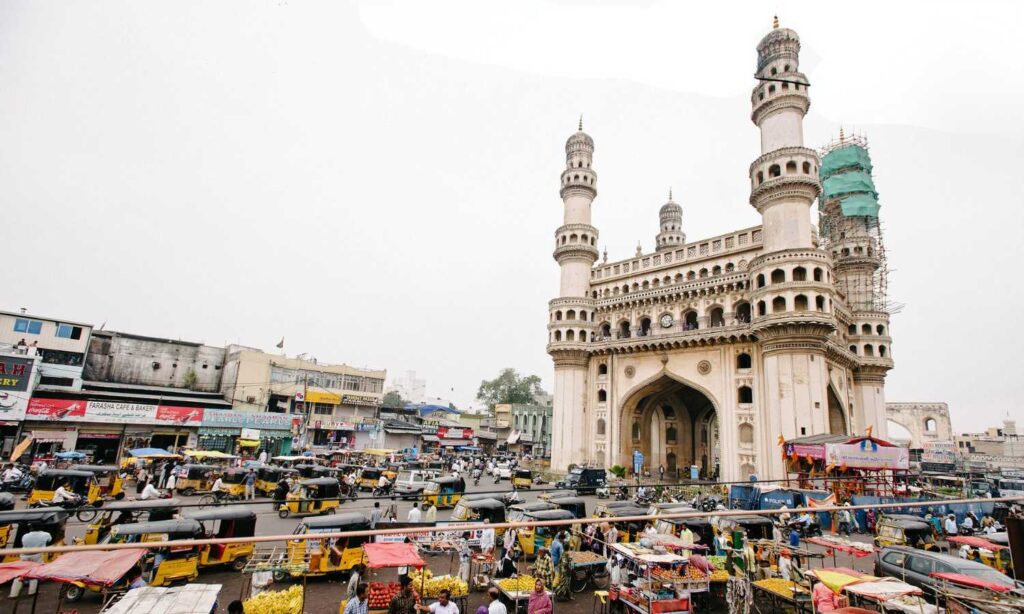
Hyderabad: The Telangana High Court on Thursday directed the State Government to submit an audiovisual presentation explaining the alignment of Corridor-VI under the Hyderabad Metro Rail Phase-II project. The court issued the direction while hearing petitions opposing metro construction in heritage-sensitive areas.
Chief Justice Aparesh Kumar Singh and Justice GM Mohiuddin said repeated oral explanations failed to clarify the exact route of the proposed corridor. The Bench asked the Government to visually demonstrate the alignment instead of relying on verbal submissions and paper sketches.
The case relates to a public interest litigation and a connected writ petition challenging metro work near the Charminar and Falaknuma heritage precincts. The petitioners sought a complete halt to construction until authorities conduct an independent heritage impact assessment and secure statutory approvals.
Appearing for the petitioners, Advocate Immaneni Rama Rao said G.O. Ms. No. 4, issued on January 2, 2003, prohibited construction in Charminar precinct-10 and Falaknuma precinct-12. He also cited an RTI response to argue that the Government lacked mandatory permissions.
Representing the State, Additional Advocate-General Mohammed Imran Khan submitted eight design sketches and denied any violation of heritage norms. He said the project did not affect any protected structure and largely followed existing alignments. He added that the work might affect only a window and a compound wall.
The Government further argued that heritage clearance was unnecessary as the alignment lay beyond the restricted 500-metre zone. It stated that the corridor passed between 700 metres and one kilometre from the Charminar. Accepting the court’s suggestion, the Additional Advocate-General agreed to present a computer-generated simulation marking all heritage locations.
Stating that oral submissions failed to provide sufficient clarity, the Bench adjourned the hearing to January 8, 2026, and directed the State to return with the audiovisual presentation.
About The Author