
Ispahani Tea expansion grew through Hyderabad’s neighbourhood retail network
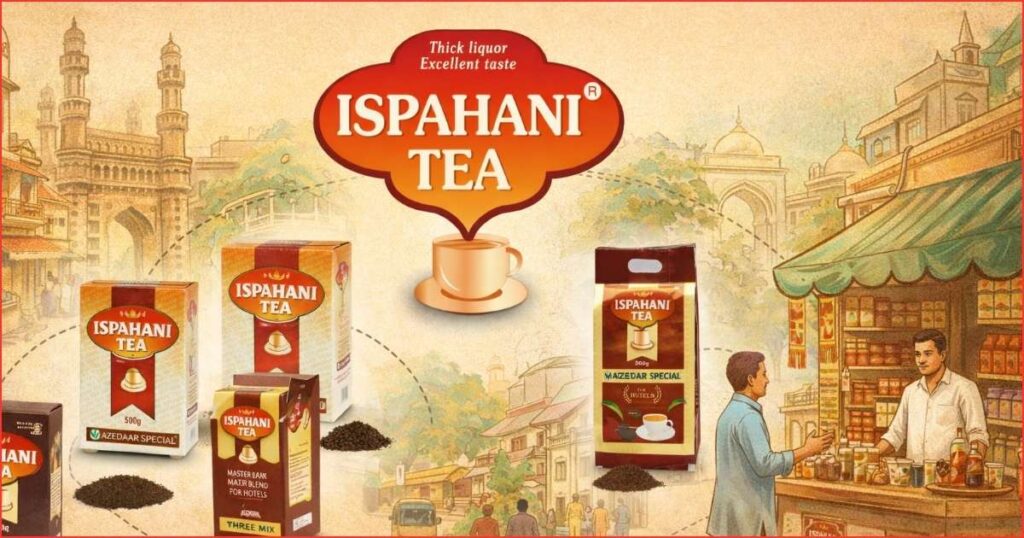
Hyderabad: Ispahani Tea expanded in Hyderabad by building steady neighbourhood availability rather than relying on headline campaigns, allowing repeated daily purchases to anchor the brand inside the city’s local retail network over several decades.
The brand entered Hyderabad in the 1960s, when tea buying was shaped by small, familiar outlets and frequent repeat visits. At the time, the city’s retail economy depended far more on proximity and trust than on large-format visibility. Tea was not treated as an occasional purchase. Instead, households bought it regularly, often from the same shopkeeper, which made shelf presence more important than promotional recall.
That structure influenced the brand’s growth. Rather than chasing rapid public visibility, Ispahani Tea widened distribution across residential pockets, market streets and routine shopping points. As a result, the brand became part of everyday buying behaviour. Its growth came through repeated access, not sudden bursts of attention.
In Hyderabad, neighbourhood retail historically served a wider function than simple exchange. It operated as a social point where purchase habits were reinforced through repetition, familiarity and observation. In such an environment, tea brands gained ground when they fit easily into established household routines. Ispahani Tea expansion followed that logic closely, favouring deep local reach over broad citywide projection.
How Ispahani Tea expansion stayed rooted in local retail
As Hyderabad grew outward, new colonies, mixed-use areas and transport-linked settlements created fresh demand. Even so, the basic rhythm of tea buying changed little. Families still depended on nearby stores, known vendors and convenient supply. That continuity preserved the importance of hyperlocal access, especially in a product category built on daily use.
The brand adapted to those urban shifts without changing its core method. Distribution moved with the city’s spread, yet the underlying model remained stable. Ispahani Tea stayed accessible in the places where routine demand formed, from older compact neighbourhoods to newer suburban stretches. That allowed it to remain relevant across changing phases of Hyderabad’s development.
This approach also reduced exposure to the volatility that often affects brands driven mainly by visibility. Products promoted through heavy campaigns can draw short-term attention, but demand may flatten once novelty fades. Tea works differently. It is tied to habit, frequency and continuity. In that setting, Ispahani Tea expansion drew strength from repeat use rather than trend cycles.
The contrast became sharper as advertising and media ecosystems changed. Many consumer brands increasingly depended on large promotions and competitive visibility to hold public attention. Yet tea remained a category where attention alone could not easily disrupt existing household patterns. In Hyderabad, buyers did not typically shift brands on impulse. Familiarity, reliability and prior experience carried greater weight.
Ispahani Tea expansion tracked the city’s local buying habits
That consumer behaviour gave an advantage to brands already embedded within local retail circuits. When a tea brand is regularly available at the nearest shop, it becomes part of the household default. This is especially true in a category bought in small quantities and at frequent intervals. Proximity matters because convenience reinforces loyalty every time a purchase is repeated.
The economics of tea buying strengthened that pattern. Unlike aspirational or discretionary goods, tea is woven into ordinary household budgets and daily consumption. Therefore, easy access often matters more than image. A brand that is consistently stocked near home gains practical value, and that practical value gradually becomes habit. Over time, habit becomes durable brand recognition.
That is where Ispahani Tea expansion acquired a distinct character. The brand did not rely primarily on slogans to circulate its name. Instead, recognition spread through recurring retail exchanges, household use and neighbourhood familiarity. Its identity grew through presence in kitchens and kettles, not through high-volume public messaging. The pace was slower, but the result was more resilient.
The later decision to open a flagship retail presence in Hyderabad’s Old City did not signal a break from that long-standing model. Instead, it reflected confidence in the same localised retail logic that had sustained the brand. The move reinforced continuity with the city’s established buying culture rather than presenting a dramatic repositioning.
In a media environment that often rewards spectacle, the company’s trajectory offered a different model of growth. It showed that in categories built on repetition, integration can matter more than amplification. Hyderabad’s tea economy continued to reward familiarity, function and everyday access. Within that setting, Ispahani Tea expansion remained closely aligned with how the city actually bought and consumed tea.
About The Author